The best burr grinder for most households is the Breville Smart Grinder Pro: it has 60 grind settings, programmable dosing and costs $199.95. If you brew several ways, the Fellow Opus 2 is the stylish all-purpose option. For filter coffee fans who want the quietest, tidiest experience, the Fellow Ode Gen 2 is a luxury pick. And on a budget, the TIMEMORE Chestnut C3s is a capable manual grinder at $89.
Grinding fresh is the biggest upgrade many people can make to their coffee. A good burr grinder makes particles of a similar size, which means even extraction and a clearer cup.
Our picks at a glance
| Product | Best for | Type | Price (Oct 2026, US list) |
|---|---|---|---|
| Breville Smart Grinder Pro | All-rounder | Electric conical burr | $199.95 |
| Fellow Opus 2 | Many brew methods | Electric conical burr | $199.95 |
| Fellow Ode Gen 2 | Filter coffee | Electric | $399.95 |
| TIMEMORE Chestnut C3s | Budget or travel | Manual, 38 mm steel burrs | $89 |
Breville Smart Grinder Pro: Best all-rounder
The Breville Smart Grinder Pro is a dependable conical burr grinder with plenty of control. Breville lists 60 grind settings from espresso to French press, and Dosing IQ technology lets you set the grind time in 0.2-second increments, so the same dose is ground every time. You can choose between “cups” for French press or filter and “shots” for espresso.
It costs $199.95. For households that make espresso one day and filter coffee the next, the range and programmable dose are the main benefits. The trade-offs are plastic construction and a footprint larger than a manual grinder. For the very finest espresso adjustments, enthusiasts often prefer more expensive models.
Breville Smart Grinder Pro
A conical burr grinder with 60 grind settings, programmable dosing in 0.2-second steps and options from espresso to French press.
$199.95 (October 2026, US list price)
Fellow Opus 2: Best for several brew methods
The Fellow Opus 2 is a conical burr grinder designed to do everything. Fellow describes it as grinding for everyone in your home, from cappuccinos in the morning to pour-over in the afternoon and cold brew at the weekend. It has built-in grind size guidance for each brew method and an anti-static design to keep the counter tidy, and a 2-year warranty.
The price is $199.95 in standard colours, with some finishes at $249.95. It is new, so it has a shorter track record than the Breville, and for the finest espresso work a dedicated espresso grinder still gives more control.
Fellow Opus 2 Conical Burr Grinder
An all-purpose conical burr grinder with built-in grind size guidance and an anti-static design, covering espresso through cold brew.
$199.95 (October 2026, US list price)
Fellow Ode Gen 2: Best for filter coffee
The Fellow Ode Brew Grinder Gen 2 is built for filter and brew coffee. Fellow describes it as quiet, clean and precise, with anti-static technology, a magnetically aligned catch cup and a built-in knocker, plus an automatic stop to switch the grinder off at the right moment. It carries a 2-year warranty.
The standard version costs $399.95, with an upgraded burr option at $599.95. That is a lot of money for a single-purpose grinder, so it suits pour-over enthusiasts who want a quiet, controlled grind.
Fellow Ode Brew Grinder Gen 2
A flat-burr electric grinder for filter coffee with anti-static technology, a magnetic catch cup and automatic stop.
$399.95 (October 2026, US list price)
TIMEMORE Chestnut C3s: Best manual grinder
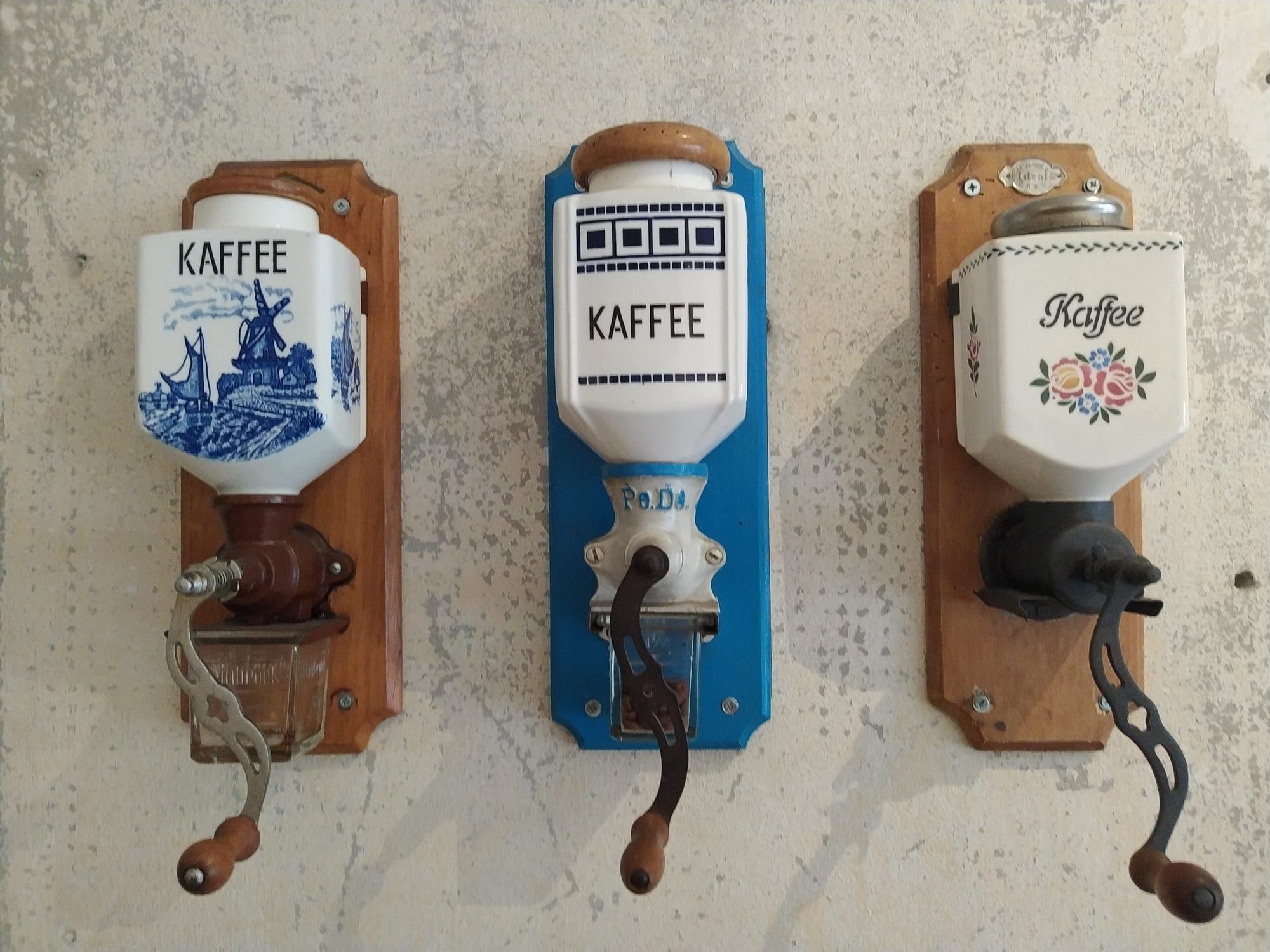
The TIMEMORE Chestnut C3s is an $89 hand grinder with an all-metal unibody built from a single piece of aluminium alloy and 38 mm stainless steel burrs. TIMEMORE says it grinds up to 30 g, and offers 0 to 90 clicks of adjustment, from fine enough for espresso to coarse enough for immersion brews. A version with a pull-to-fold handle costs $99.
Manual grinders reward patience. They are quiet, compact and travel-friendly, but you do the work. For one or two cups a day, that is a good trade. For a household that makes six cups every morning, an electric grinder is easier.
TIMEMORE Chestnut C3s Manual Grinder
A compact manual burr grinder with an all-metal unibody and 38 mm stainless steel burrs that grinds up to 30 g.
$89 (October 2026, US list price)
What to look for in a burr grinder
Burr type
Conical burrs and flat burrs both work well. Conical burrs are common in home grinders and tend to be forgiving. Flat burrs, used in many premium grinders, are often praised for clarity in filter coffee. The burr material and size matter more than the label.
Grind range
A grinder should cover your brewing method. Espresso needs fine, precise steps. Pour-over and drip need medium. French press and cold brew need coarse. A grinder that struggles at one end will frustrate you.
Adjustment steps
Stepped adjustments give repeatable settings, and stepless ones allow fine tuning. Many home grinders have stepped settings with enough range for most brews.
Retention and static
Retention is coffee that stays in the grinder. Anti-static features, like those in the Fellow grinders, reduce mess and make doses more predictable.
Noise
Electric grinders are loud. A quieter design is worth having if you grind early in the morning.
Build and service
Metal bodies last longer than plastic ones. A good warranty and replaceable burrs extend the life.
Tip
Change one variable at a time. If your coffee tastes sour, grind finer; if it tastes bitter, grind coarser. Small changes make a big difference.
Why a burr grinder changes your coffee
A burr grinder crushes beans between two rotating surfaces set a fixed distance apart, so the particles come out in a narrow range of sizes. A blade grinder chops at random, producing both powder and boulders. In the cup, the powder over-extracts and tastes bitter, while the boulders under-extract and taste sour, so the result is muddled. That is why the grinder is often a better upgrade than a more expensive brewer.
Grinding just before brewing helps too. Ground coffee goes stale much faster than whole beans, because far more surface is exposed to air. Buy whole beans in quantities you will use within a few weeks, store them in an airtight container away from heat and light, and grind only what you need.
How to dial in a new grinder
- Start from a recommended setting. Use the guide printed in the manual or on the grinder, such as the Opus 2’s built-in guidance.
- Brew and taste. Sour, thin or salty coffee usually means the grind is too coarse. Bitter, harsh or dry coffee means it is too fine.
- Adjust one step at a time. Move the dial or the clicks by a small amount and brew again.
- Record what works. Write the setting beside the beans and method, because different beans need different settings.
- Re-check when beans change. A new roast or a bag at a different stage of freshness may call for a small adjustment.
With a manual grinder such as the C3s, which has 0 to 90 clicks, note the number of clicks from fully closed so that you can return to a good setting.
Cleaning your grinder
Coffee oils build up and go rancid, which taints flavour. Clean the burr chamber every few weeks, or more often if you use oily dark roasts.
- Unplug the grinder first.
- Remove the hopper and the upper burr if the maker allows it, and brush out grounds with a dry brush.
- Avoid water on burrs and electronics. Water can rust steel burrs and damage motors.
- Use grinder-cleaning tablets sparingly, following the maker’s directions, if you want a deeper clean.
- Wipe the catch cup and keep it dry to reduce static and clumping.
Who should skip each grinder
| Grinder | Skip it if… |
|---|---|
| Breville Smart Grinder Pro | You want a metal body or the finest espresso control |
| Fellow Opus 2 | You prefer a long-established model with years of owner reviews |
| Fellow Ode Gen 2 | You drink espresso, or $399.95 is more than you want to spend |
| TIMEMORE Chestnut C3s | You brew large batches or dislike hand grinding |
A note on pairing with brewers
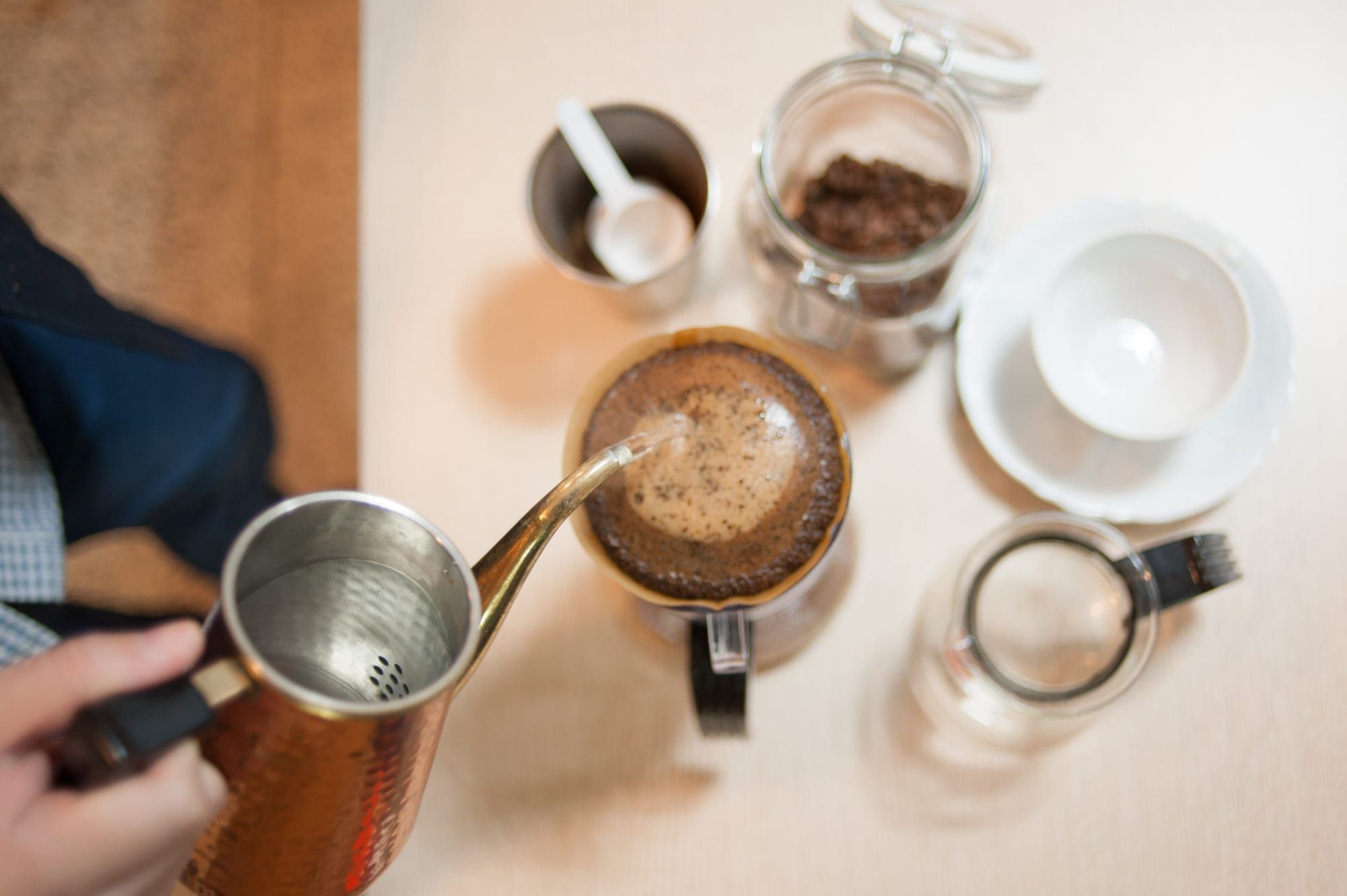
A grinder should match your brewer. The Breville Smart Grinder Pro pairs well with a compact espresso machine such as the Breville Bambino, because it covers fine espresso settings. The Fellow Ode pairs naturally with a pour-over dripper and a gooseneck kettle, because its focus is filter coffee. The C3s is a natural travel partner for an AeroPress or a V60 dripper. Our pour-over guide covers the brewing side in detail.
Grind size by brew method
| Brew method | Grind size | Texture guide |
|---|---|---|
| Espresso | Fine | Finer than table salt |
| Moka pot | Medium-fine | Slightly coarser than espresso |
| Pour-over | Medium to medium-fine | Like coarse sand |
| Drip machine | Medium | Like sea salt |
| French press | Coarse | Like breadcrumbs |
| Cold brew | Coarse | Like coarse breadcrumbs |
These are starting points. Different beans, roast levels and recipes need adjustments.
Electric or manual?
| Factor | Electric | Manual |
|---|---|---|
| Speed | Seconds | A minute or two |
| Effort | Press a button | Crank by hand |
| Price | $200 and up for the picks here | $89 for the C3s |
| Noise | Louder | Quiet |
| Portability | Low | High |
| Capacity | Higher | Up to 30 g for the C3s |
If you make one cup at a time and travel, a manual grinder is wonderful. If you make larger batches or are in a hurry, choose an electric model.
Which should you buy?
- Breville Smart Grinder Pro for the most flexible all-rounder.
- Fellow Opus 2 for a stylish grinder that handles many brews.
- Fellow Ode Gen 2 if you drink filter coffee and want a premium experience.
- TIMEMORE Chestnut C3s if you want an affordable, portable manual grinder.
How we chose
We compared official specifications and pricing as of October 2026, alongside the consensus of established independent reviews. We chose grinders that cover distinct needs, from low-cost manual to premium electric, with published prices and warranty terms.